
How Much Does It Cost to Study in Australia in 2026?
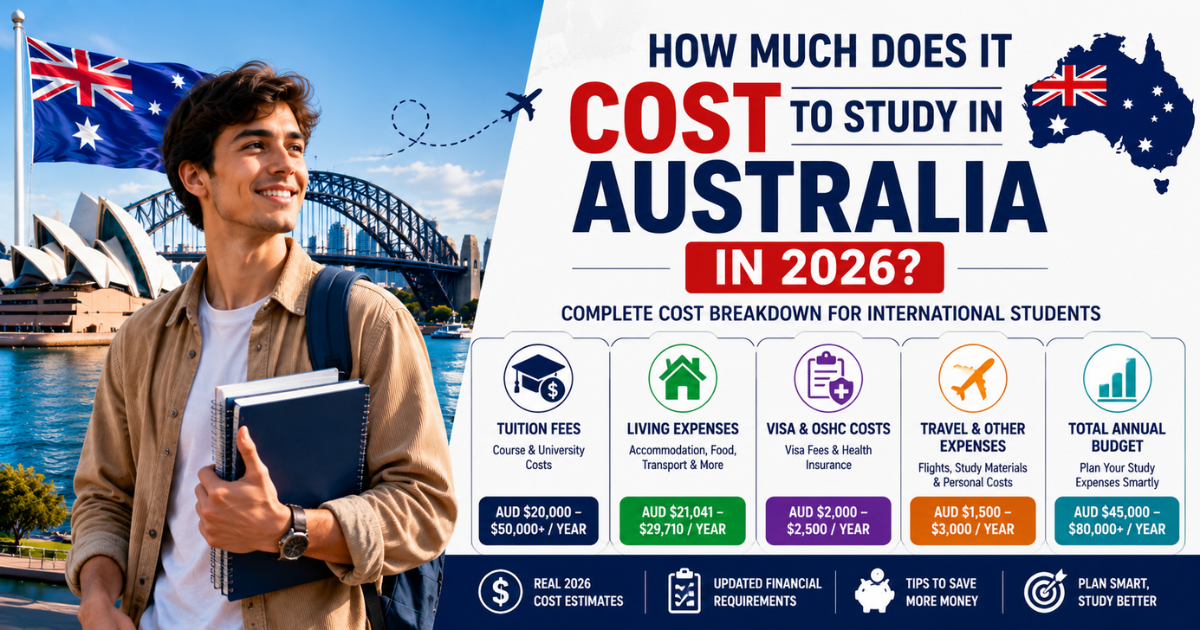
Planning to study in Australia? Learn the real cost of studying in Australia in 2026 including tuition fees, student visa costs, living expenses, accommodation, OSHC, and monthly student budgets.
Introduction
Australia remains one of the world's most popular destinations for international students.
Every year, thousands of students move to Australia to pursue:
- Bachelor's degrees
- Master's programs
- Diploma courses
- PhD research
- Vocational education (VET)
- English language programs
But before applying, students and families usually ask one important question:
How much does it actually cost to study in Australia in 2026?
The answer is not just tuition fees.
Studying in Australia involves several expenses including:
- Tuition fees
- Student visa costs
- Overseas Student Health Cover (OSHC)
- Accommodation
- Food and groceries
- Transport
- Utilities and personal expenses
- Travel costs
In 2026, Australia has updated financial requirements for international students, making proper financial planning more important than ever.
This guide explains the complete cost breakdown.
Major Costs of Studying in Australia
International students usually spend money across several categories.
| Expense Category | Main Cost Type |
| Tuition Fees | Course and institution fees |
| Student Visa Costs | Visa application fees |
| Living Expenses | Rent, food, transport |
| OSHC | Mandatory health insurance |
| Study Materials | Books, software, supplies |
| Travel Costs | Flights and relocation |
Your total budget depends on:
- Course type
- University choice
- Study location
- Accommodation style
- Lifestyle habits
Tuition Fees in Australia (2026)
Tuition fees are usually the biggest expense for international students.
Costs vary depending on:
- University reputation
- Course level
- Field of study
- Study duration
Average Tuition Fees by Study Level
| Study Program | Estimated Annual Fees (AUD) |
| English Language Courses | AUD $350–$550 per week |
| Diploma / Certificate Courses | AUD $8,000–$22,000 |
| Bachelor's Degree | AUD $20,000–$50,000+ |
| Master's Degree | AUD $22,000–$55,000+ |
| MBA Programs | AUD $35,000–$80,000+ |
| PhD / Research Programs | AUD $20,000–$45,000+ |
Professional programs usually cost more.
Examples include:
- Medicine
- Dentistry
- MBA programs
- Engineering specialisations
- Aviation courses
A humanities or business degree may cost significantly less than medical studies.
University Tuition Fee Examples
Different institutions charge differently.
Examples may include:
| Institution Type | Approximate Fee Range |
| Public Universities | Moderate to high |
| Group of Eight Universities | Higher fees |
| Regional Universities | Often lower costs |
| Vocational Institutions | Varies by provider |
Students should always confirm exact tuition directly with their chosen institution.
Australian Student Visa Cost (2026)
To study legally in Australia, international students generally require the Student Visa (Subclass 500).
The Australian Government student visa application fee in 2026 starts from approximately:
AUD $2,000 per application
Additional fees may apply for:
- Partner applicants
- Dependent children
- Medical examinations
- Police checks
Student Visa Related Costs
| Expense | Estimated Cost |
| Student Visa Application | From AUD $2,000 |
| Medical Examination | AUD $300–$600+ |
| Police Certificates | Varies by country |
| Biometrics (if required) | Country dependent |
Students should budget beyond just the visa application fee.
Australian Financial Requirement for Student Visa (2026)
One of the biggest 2026 updates involves financial evidence requirements.
Students must demonstrate access to sufficient funds for their studies and living expenses.
The current annual living cost benchmark for a single student is:
AUD $29,710 per year
Additional financial requirements apply for family members.
2026 Student Visa Financial Capacity Requirement
| Applicant Category | Required Amount (Approx.) |
| Primary Student | AUD $29,710 |
| Partner / Spouse | AUD $10,394 |
| Dependent Child | AUD $4,449 per child |
| Schooling Cost (school-age child) | Additional requirement may apply |
Students must also demonstrate:
- Tuition fees
- Travel costs
- Family expenses (if applicable)
Financial evidence requirements are important visa considerations.
Living Costs in Australia (2026)
Living expenses represent a major part of student budgeting.
Actual spending varies significantly.
Major cost factors include:
- City
- Housing type
- Lifestyle
- Transportation habits
- Personal spending
Average Monthly Living Costs
| Expense Type | Estimated Monthly Cost (AUD) |
| Accommodation | $800–$2,200+ |
| Food & Groceries | $300–$700 |
| Transport | $100–$250 |
| Utilities & Internet | $80–$250 |
| Phone & Mobile | $30–$80 |
| Personal Expenses | $150–$500+ |
Many students underestimate daily living costs.
Planning carefully is extremely important.
Accommodation Costs in Australia
Accommodation is usually the largest living expense.
Students commonly choose between:
- Shared housing
- Student accommodation
- Homestay
- Private rental apartments
- On-campus housing
Average Accommodation Costs
| Accommodation Type | Estimated Weekly Cost |
| Shared Rental | AUD $180–$450 |
| Student Accommodation | AUD $250–$600 |
| Homestay | AUD $300–$500 |
| Private Apartment | AUD $450–$900+ |
Costs vary heavily by city.
Sydney and Melbourne generally remain more expensive than many regional locations.
Regional cities may offer lower accommodation costs.
Cost of Studying in Major Australian Cities
Your study location strongly affects expenses.
Estimated Monthly Student Budget by City
| City | Estimated Monthly Cost (excluding tuition) |
| Sydney | AUD $2,500–$4,500+ |
| Melbourne | AUD $2,300–$4,200+ |
| Brisbane | AUD $2,000–$3,800+ |
| Perth | AUD $2,000–$3,700+ |
| Adelaide | AUD $1,900–$3,500+ |
| Regional Cities | Often lower |
Living in regional Australia can sometimes reduce costs.
Overseas Student Health Cover (OSHC)
OSHC is mandatory for most international students.
Students must maintain approved health insurance during their stay.
OSHC helps cover eligible healthcare expenses.
Typical OSHC Costs
| Coverage Type | Approximate Cost |
| Single Student | AUD $600–$900+ per year |
| Couple Cover | Higher |
| Family Cover | Higher |
OSHC pricing depends on:
- Provider
- Coverage period
- Family status
Students should include OSHC in their budget planning.
Study Materials and Hidden Costs
Many students only calculate tuition and rent.
This is a mistake.
Additional expenses often include:
- Textbooks
- Laptop
- Software subscriptions
- Lab materials
- Printing
- Clothing
- Furniture setup
- Household items
Estimated Extra Costs
| Expense | Approximate Annual Cost |
|---|---|
| Books & Materials | AUD $500–$2,000 |
| Laptop / Technology | AUD $800–$2,500 |
| Personal Setup Costs | AUD $500–$1,500 |
These hidden expenses can significantly affect budgets.
Travel Costs
Students must also budget for travel.
Travel expenses commonly include:
- Flight tickets
- Airport transfers
- Initial relocation expenses
- Return airfare planning
Flights vary by departure country and season.
Students should factor this into their overall financial preparation.
Sample Annual Budget — Single International Student (2026)
Example Budget Calculation
| Expense | Estimated Annual Cost (AUD) |
|---|---|
| Tuition Fees | $30,000 |
| Living Costs | $29,710 |
| OSHC | $700 |
| Visa Fee | $2,000 |
| Flights & Travel | $2,000 |
| Study Materials | $1,000 |
| Estimated Total | Approx. AUD $65,000+ |
This example varies significantly depending on course, city, and lifestyle.
Can Students Work While Studying?
Many students ask:
Can part-time work cover Australian study costs?
International students may receive work rights under visa conditions.
Part-time work can help with:
- Food expenses
- Transport costs
- Personal spending
However, students should not rely solely on part-time income to finance their studies.
Proper financial preparation remains essential.
Ways to Reduce Study Costs in Australia
Students can manage expenses strategically.
Choose Regional Australia
Regional cities may provide:
- Lower rent
- Reduced living costs
- Different migration opportunities
Apply for Scholarships
Scholarships can significantly reduce tuition pressure.
Many institutions offer:
- Merit scholarships
- International student awards
- Research scholarships
Share Accommodation
Shared living arrangements can lower housing expenses.
Cook at Home
Food spending often becomes cheaper through meal preparation.
Small budgeting habits can make a big difference.
Reality Check: How Much Money Do You Really Need?
Many students underestimate Australian study costs.
A realistic 2026 budget should consider:
- Tuition fees
- Living expenses
- Visa costs
- Health insurance
- Travel
- Emergency funds
For many students, the total annual cost may fall somewhere between:
AUD $35,000–$80,000+ per year
depending on course, city, and lifestyle.
Call to Action
Planning to study in Australia?
Victory Group Australia can help you:
- Choose the right study pathway
- Understand 2026 financial requirements
- Plan your student visa strategy
- Estimate your real study budget
Book your consultation today and start your Australian education journey with confidence.

- What is the minimum cost to study in Australia in 2026?
Costs vary, but many students should plan for tuition, living costs, visa fees, and insurance. - How much money must students show for an Australian student visa?
The current benchmark for a primary applicant is approximately AUD $29,710 in annual living costs, plus tuition and travel requirements. - Is Australia expensive for international students?
Australia can be expensive depending on city, accommodation, and lifestyle. - Can students work while studying?
Student visa holders may have work rights subject to visa conditions. - Which Australian city is cheapest for students?
Costs vary, but some regional and smaller cities may offer lower living expenses compared with Sydney or Melbourne. - Does tuition cost differ by course?
Yes. Medical, engineering, and MBA programs often cost more than many business or humanities programs.